






Key Takeaways:
- Accurate measurements drive the entire project.
- In-house manufacturing ensures faster, more reliable quality.
- CNC precision is central to both accuracy and efficiency.
- Each cabinet goes through multiple hands-on quality-control checkpoints.
- The full process, from consultation to installation, typically runs 4 to 6 weeks.
In many kitchen remodeling projects, custom cabinetry is the biggest investment, often taking up anywhere from 30% to 40% of the total budget. For this reason, anyone considering treating themselves to bespoke elements should know what it takes to make them worth it.
Today, we’ll showcase how Kitchen Magic, one of the best custom kitchen cabinet builders in Connecticut, New Jersey, Pennsylvania, and New York, does it. We’ll break down every phase of the process, from consultation to installation, so you can see the level of precision and dedication that goes into making cabinetry that is truly top-of-the-line.
How do you build custom kitchen cabinets from scratch?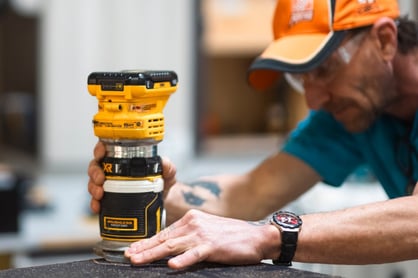
Custom cabinet fabrication is a methodical process that begins with understanding the client’s style, space, and expectations, followed by precision workmanship that aligns with their vision, and strict quality control every step of the way.
1. Initial consultation - scope, options, and expectations
Everything begins with the client conversation and a design consultation. The company’s representative captures the homeowner’s goals (style, budget, degree of customization), explains the features of their product lines, and outlines warranty and maintenance.
They also help the client determine whether they should go for a full replacement, or if cabinet refacing (e.g., updating doors, drawers, and exterior surfaces while keeping the boxes) might be the more efficient option.
This step is crucial, as it provides a general sense of direction and helps manage expectations for both sides. These early choices also determine manufacturing methods (CNC programming and time, thermoforming vs. veneer application), lead times, and final cost.
2. Home visit, measurement & project packet creation
After the consult, a draftsman visits the home to take detailed, accurate measurements and to inspect existing conditions (plumbing, flooring, walls, appliances). Those measurements are turned into a comprehensive “project packet” that outlines precise cabinet sizes, custom angles, door styles, hardware, and any on-site constraints. This packet is central to everything that follows; it’s entered into the factory workflow and used by purchasing, processing, and fabrication teams.
3. Project review, purchasing & scheduling
Once measurements and selections are finalized, an internal review ensures specs are complete and error-free. The company orders raw materials needed (wood, furniture-grade boards, laminates, adhesives, hardware, etc.) and the project is scheduled into the factory.
The company’s in-house cabinetry manufacturing process means reduced dependency on suppliers, which minimizes the “multiple touches” and damage risks associated with long supply chains, enabling it to establish a more predictable timeline compared to outsourced products.
4. CNC programming, panel cutting, and component fabrication
With materials on hand, production starts on the factory floor:
- Panel cutting: Big sheet goods (plywood or furniture-grade board) are cut to size on digitally programmed panel saws or a CNC machine. This ensures repeatable accuracy and tight tolerances for cabinet boxes and shelving.
- CNC routing & drilling: CNC machines cut cabinet panels, bore hinge locations, dowel holes, and joinery features; for engineered lines like Barwen, dowel holes are drilled for doweled construction.
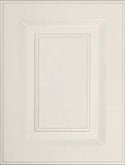
- Door fabrication: Doors may be cut from solid boards on the CNC. Some doors are thermoformed - a vinyl laminate is applied to a door core (common for furniture-grade core doors), then trimmed, cleaned, and inspected. Wood doors available with Classic cabinetry only are handled differently and finished to the customer's color choices.
5. Joinery and assembly
Cabinet assembly methods depend on the product line:
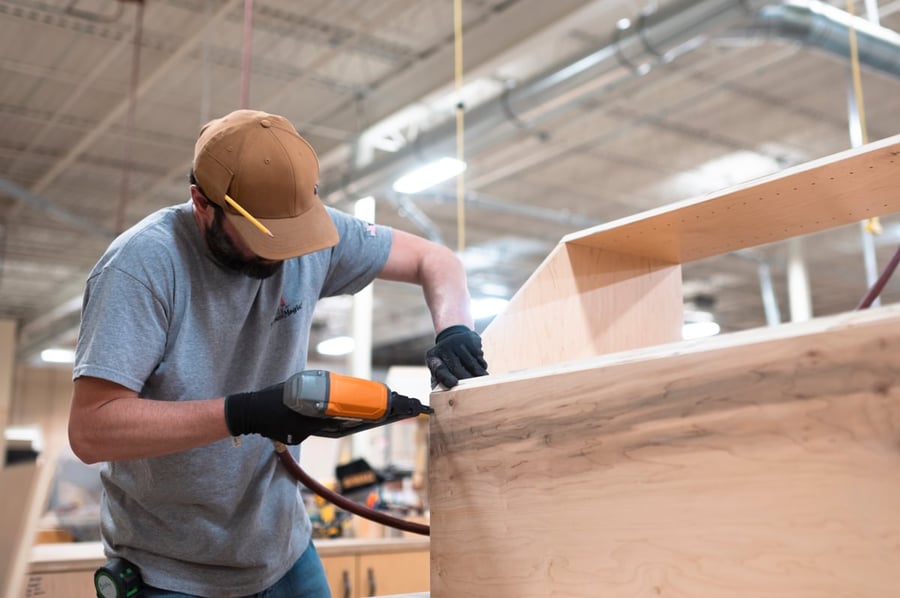
- Barwen (engineered) panels are doweled, glued, then mechanically fastened (staples + screws) to assemble boxes - a reliable, cost-effective approach. Exterior exposed surfaces receive matching laminate finishing techniques (or veneer for wood options).
- Classic (all-plywood) boar is pre-finished with UV coatings or real-wood veneers; construction emphasizes durability with 3/4″ North American plywood (compared to common 5/8″), resulting in a thicker profile for better screw retention, less future warpage, and stronger joinery.
Throughout assembly, the factory follows process controls - operators, inspectors, and the manufacturing software track each packet through the line to reduce human error and ensure consistent quality.
6. Finishing and surface treatment
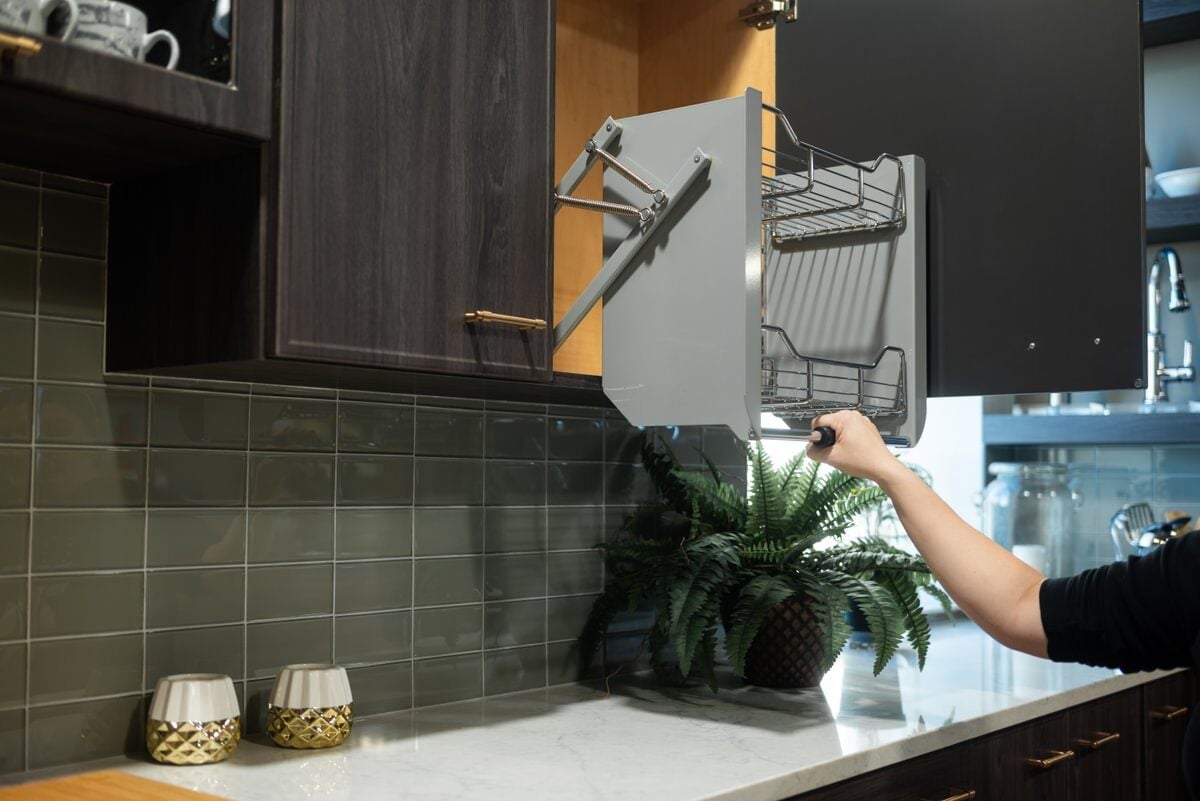
Surface finishing depends on the material; for instance, thermoformed laminate doors are trimmed and wiped down, then quality-checked for defects. Finishing defines the final look, but it also determines the maintenance requirements of new kitchen elements.
7. Quality control & testing
Quality control happens at multiple points: post-cutting, post-assembly, and post-finishing. Issues spotted early are corrected quickly because manufacturing is local - a key advantage that eliminates long lead times.
Some checks include verifying dimensions, hinge/slide fit, finish uniformity, and packaging readiness. The factory’s process-first approach is designed to reduce rework and maximize throughput.
8. Packing, delivery & installation
When cabinetry passes QC, it’s carefully packed, staged for delivery, loaded onto a Kitchen Magic fleet vehicle and transported to the customer's address. Cabinetry installation and field adjustments are performed by the company’s skilled craftsmen who assemble the new cabinetson site, install countertops and appliances as scheduled, and perform final adjustments.
Typical timeline from point-of-sale to completion is about 4 - 6 weeks (measure 1 week, manufacturing 2 - 3 weeks, delivery & install 1 - 2 weeks), with an added 1 - 2 week cushion depending on countertop or flooring coordination.
In addition, installers can handle minor in-field shims and adjustments, but large measurement errors discovered on site (which are rare) require remanufacture, hence the emphasis on accurate draftsman work and design review.
9. Warranty, support, and sustainability follow-up
Post-installation, the company provides warranty coverage and maintenance guidance. In addition, because the product is locally made, warranty claims are typically fast to resolve. The manufacturer also highlights sustainability steps (recycled cores in engineered lines, formaldehyde-free adhesives, precision cutting to reduce waste).
How do I get in touch with the #1 custom kitchen cabinets builder near me?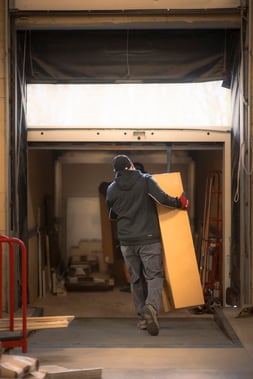
If you’re looking for the top cabinetry manufacturer in Connecticut, New York, Pennsylvania, New Jersey, and Delaware - your search is over! With over decades of expertise, Kitchen Magic is here to answer all your kitchen remodeling needs. Whether you need help designing an eco-friendly chef’s haven or wish for high-end, bespoke elements that elevate your home’s functionality and aesthetics, you can rely on our team to deliver results beyond your expectations. Contact us today via phone, email, or form on our website, and let’s talk about how we can help make your space and your life better!